Why a Reading Plan Should Feel Like a Guided Journey, Not a Checklist
Many people start a Bible reading plan with good intentions.
What gets hard is not only the reading itself.
It is the feeling that the plan is always either “on track” or “behind.”
That is one reason a reading plan works better when it feels like a guided journey, not just a checklist.
A checklist can track progress, but it cannot carry the whole experience
Checklist-style plans do one thing well:
- they make progress visible
That can be useful.
But by itself, a checklist does not always help with the deeper parts of devotional life:
- why this reading matters today
- how this part connects to the previous one
- what to do when you miss a few days
- how to re-enter without feeling like you failed
This is where a more guided Bible reading plan starts to feel more human.
People stay with journeys longer than they stay with tasks
When a plan feels like a task list, every missed item can quietly feel like a small loss.
When it feels like a path, people are more likely to think:
- “I can step back in here.”
- “I still know where I am.”
- “This is still leading somewhere.”
That is a very different emotional experience.
And it matters, because consistency is shaped by whether a person feels welcomed back.
A better reading plan gives more than assignments
A richer plan usually includes more than “read this next.”
It also gives people:
- a sense of direction
- a spiritual theme
- clearer presentation
- better continuity from day to day
That does not make a plan heavier.
If it is done well, it actually makes the reading easier to enter.
Here is what that richer plan presentation can look like in the app:
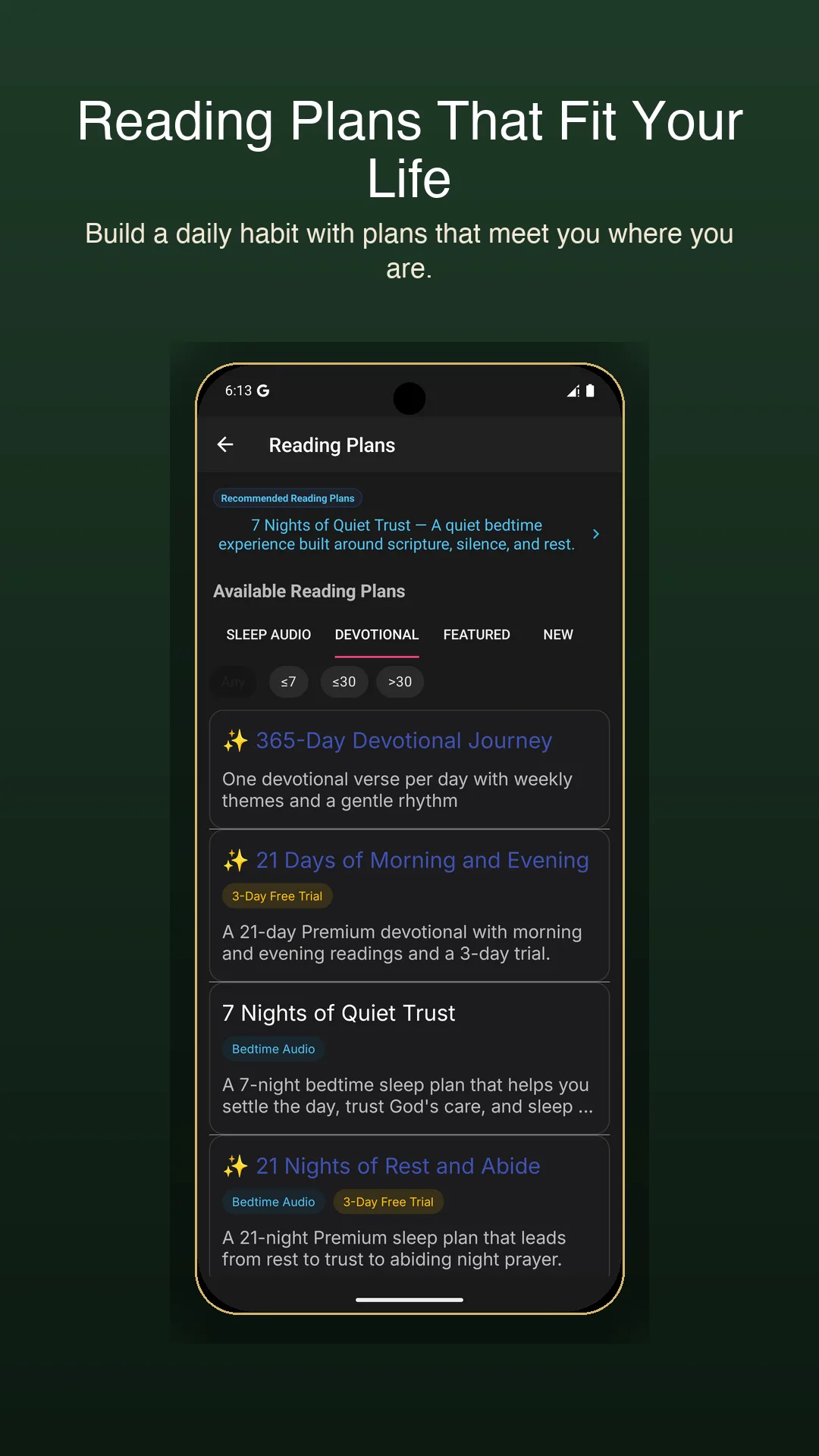
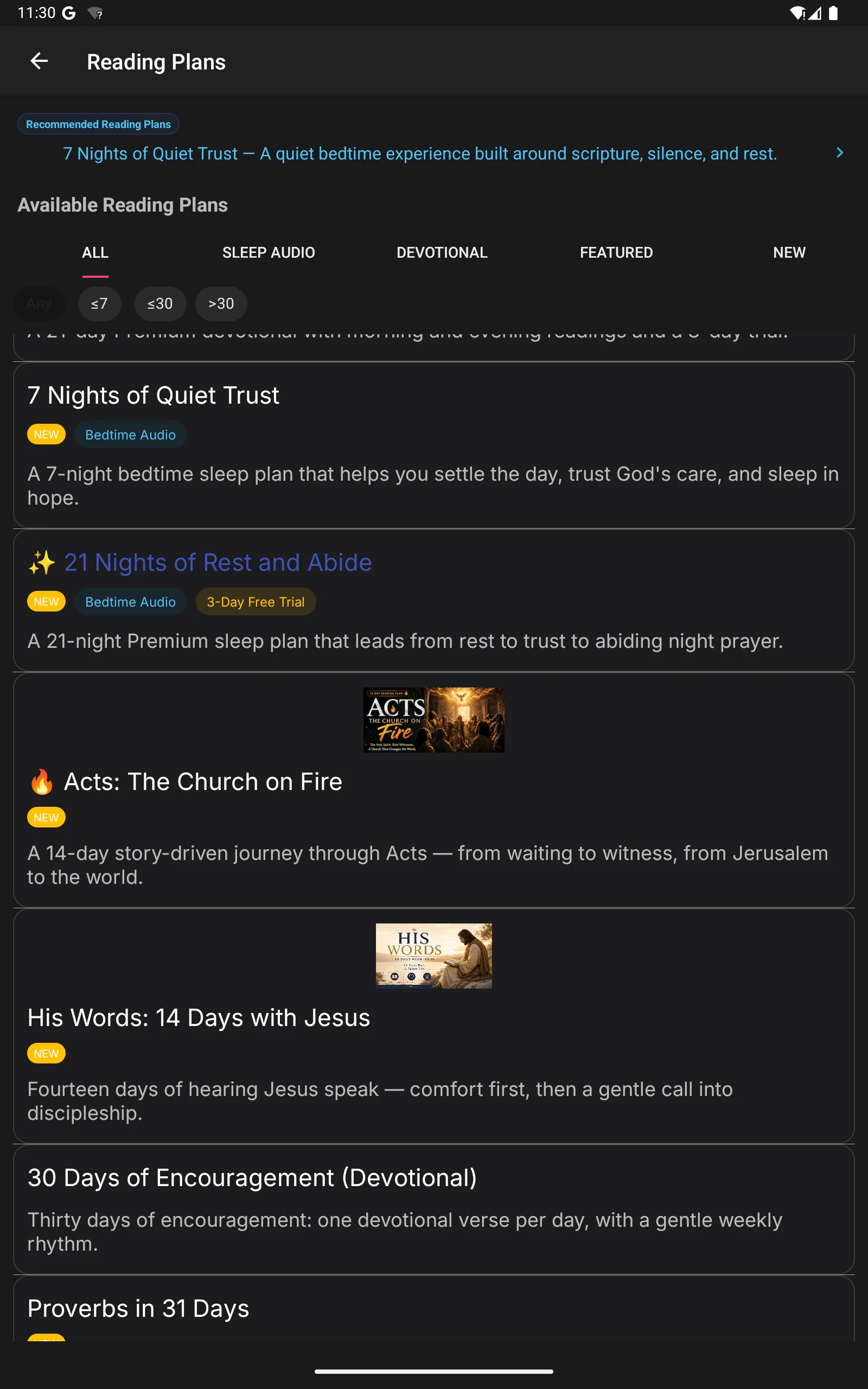
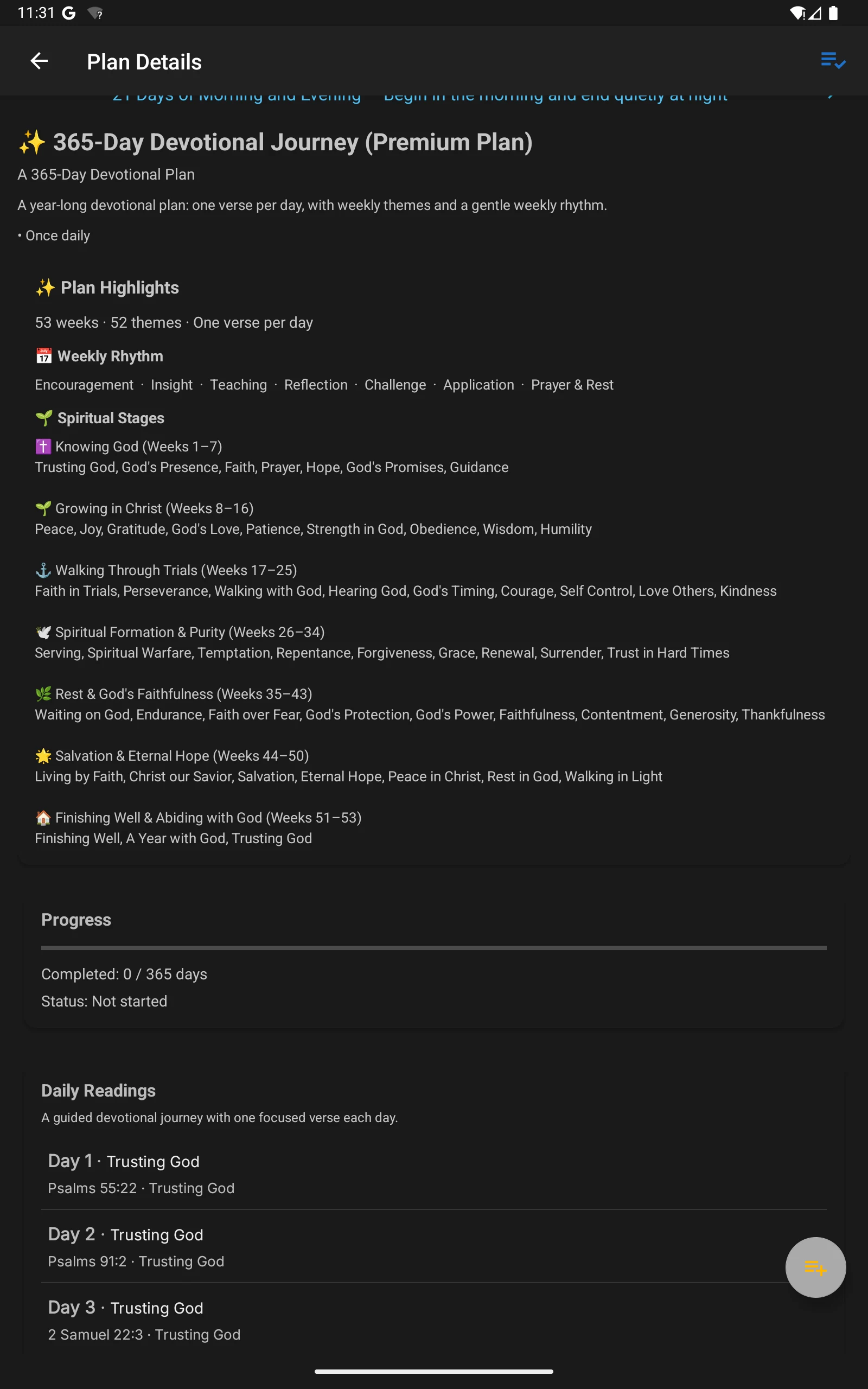
Taken together, these plan surfaces feel more like guided tracks with their own structure, pacing, and invitation to keep going, not just a box to tick for the day.
Devotional journeys can lower pressure without becoming shallow
Some plans work better because they are not trying to maximize volume.
They are trying to create rhythm.
That is why a guided devotional journey can be powerful.
Instead of only asking a reader to finish a set amount, it helps the reader:
- return each day
- understand the shape of the journey
- stay connected to Scripture even on busy days
This is especially true when the plan includes:
- one clear daily entry
- weekly continuity
- a devotional frame
- easier re-entry after missed days
The 365 devotional idea shows this well
This is part of what makes a plan like 365-Day Devotional Journey more interesting than a standard annual plan.
It is not only trying to distribute content across 365 days.
It is trying to guide a person across a fuller year of faith formation.
That kind of plan can carry:
- weekly themes
- a gradual spiritual arc
- varied daily devotional forms
- a gentler pace people can realistically return to
It can also feel more aligned with the larger KJV promise: not only to give you reading tasks, but to help you read, reflect, pray, and grow through the changing seasons of ordinary life.
So the plan becomes more than a schedule.
It becomes a structure people can live inside.
Why this matters in a KJV Bible app
In a more mature KJV Bible app, reading plans should support both Scripture access and devotional continuity.
That means a plan should not feel disconnected from the rest of the app.
It should work together with:
- faster Bible search
- verse bookmarks
- Verse of the Day
- short devotional flow
- evening rhythm
- Take a Break on overloaded days
That kind of integration makes the plan feel like part of a spiritual ecosystem, not a separate task manager.
What makes this KJV reading-plan experience different
Inside Bible KJV - Daily Devotional, reading plans are meant to feel more guided and more usable than a simple completion grid.
That includes:
- richer plan presentation
- more supportive content pages
- devotional framing around reading
- easier re-entry for inconsistent days
- plan experiences that work with broader devotional rhythm
For many people, that is what makes a Bible reading plan app worth keeping.
Not only that it tracks progress, but that it helps progress feel possible.
A good plan should help people keep going
The best reading plan is not always the most demanding one.
It is the one that helps people keep receiving Scripture over time.
That is why a reading plan should feel like a guided journey, not just a checklist.
It should carry direction, rhythm, and enough grace to let people step back in.
Keep reading or try it
If you want a KJV Bible app with richer Bible reading plans and devotional support:
- Read about devotional features: /posts/kjv-bible-app-daily-devotional-features/
- Browse the KJV online: /kjv/
- Google Play: https://play.google.com/store/apps/details?id=com.gyc.ace.kjv
A reading plan can track where you are.
A guided journey can help you keep moving.